Journal · Giza & Leopards
What Is a Black Leopard? Melanistic Leopards in Kenya Explained
A black leopard is not a separate species. It is an ordinary leopard whose coat is almost entirely black because of a genetic trait called melanism. Black leopards are far more frequent in parts of Asia but extraordinarily rare in Africa, and Laikipia in central Kenya is one of the few places on the continent where they have been photographed in modern times.
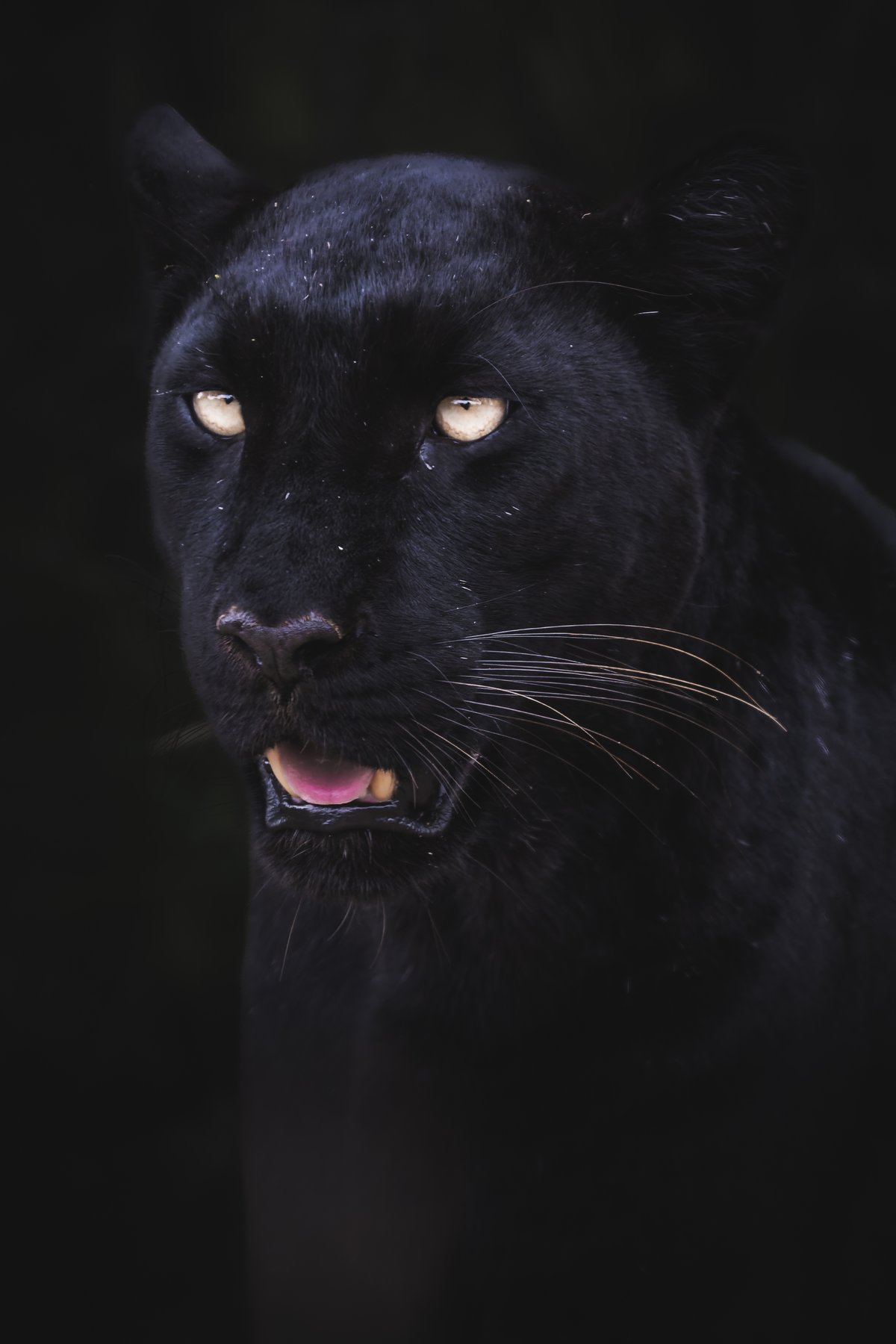
A leopard, not a different animal
Every black leopard belongs to the same species as the spotted leopards seen across Africa and Asia, Panthera pardus. The only difference is coat colour. A black leopard hunts, breeds and behaves like any other leopard, and it can share its range, and even its family, with spotted leopards.
That is why scientists prefer the term “melanistic leopard”. It describes exactly what the animal is: a leopard with melanism.
What makes a leopard black
Melanism means an animal produces an unusually large amount of dark pigment in its skin and fur. In leopards it is inherited as a recessive trait. A cub is born black only when it receives the melanistic version of the gene from both parents, so two spotted parents that both carry it can produce a black cub.
Geneticists have traced leopard melanism to a mutation in the ASIP gene, which normally helps the coat produce lighter pigment. When that gene stops working, the fur stays dark.
The spots do not disappear. The rosette pattern is still there under the dark coat, and in strong, angled light it can often be made out on a black leopard’s flank.
Why black leopards are so rare in Africa
A study that mapped verified leopard records across the species’ range found that about 11% of leopards are melanistic. They are far from evenly spread: melanism becomes more common in Asia’s moist forests and falls close to zero across most open and dry habitats.
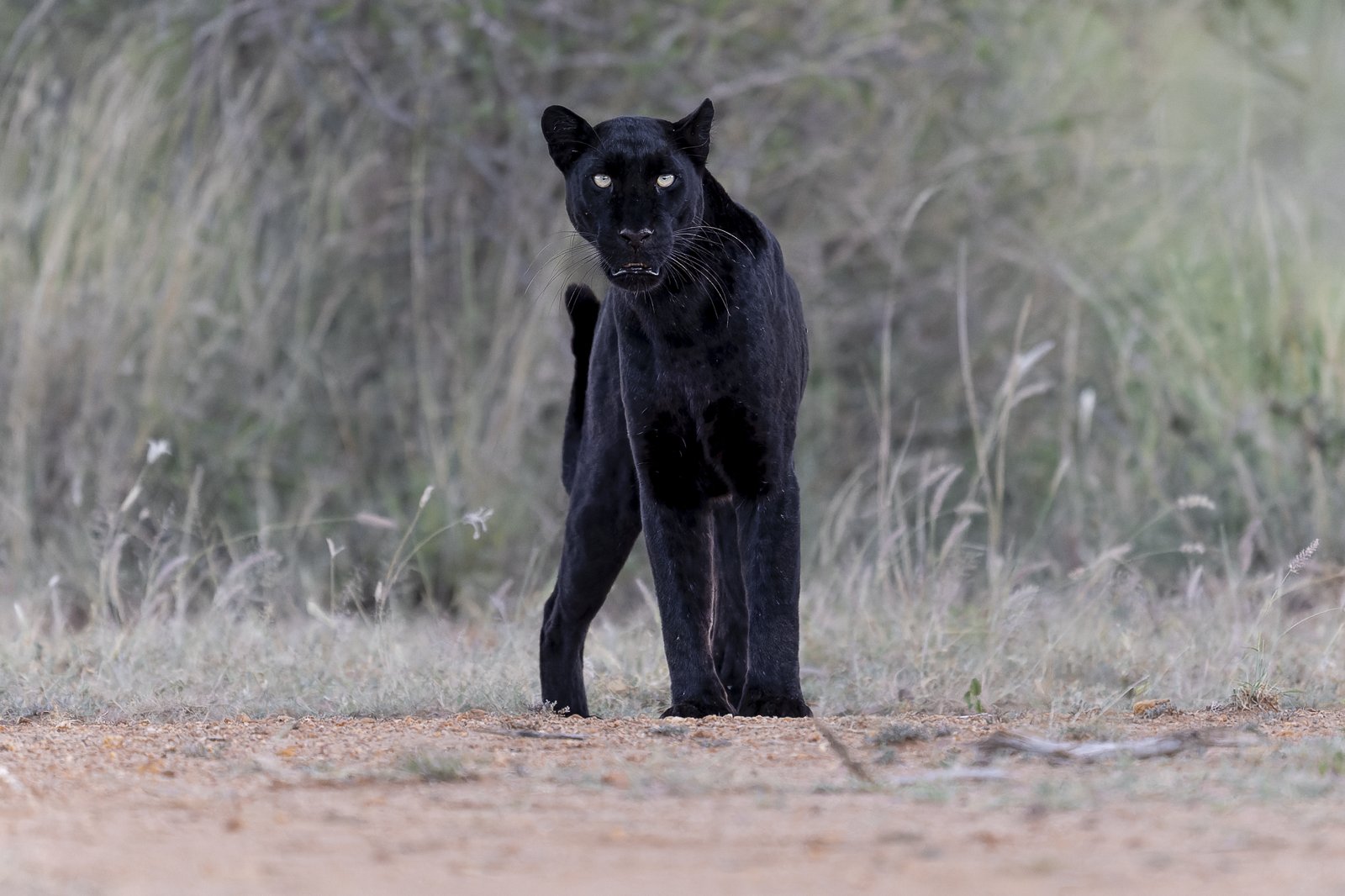
Most of Africa’s leopard range is savanna, bushland and dry woodland, which helps explain why black leopards there are so seldom recorded. Before 2019, the last scientifically documented black leopard in Africa was a 1909 photograph from Addis Ababa, Ethiopia.
Laikipia’s black leopards
In 2019, researchers from San Diego Zoo Global and their Kenyan partners, including the Kenya Wildlife Service, confirmed a young female black leopard in Laikipia County using camera traps. The images came from dry bushland around the Loisaba and Mpala conservancies, and the findings were published in the African Journal of Ecology.
Around the same time, wildlife photographer Will Burrard-Lucas captured widely shared images of a black leopard at Laikipia Wilderness Camp. Together, these records made Laikipia one of the few places in Africa where melanistic leopards have been documented in modern times.
Giza and Ewaso
Ewaso Elephant Crossing is a photo hide camp in the Ewaso Enclave Conservancy in Laikipia, and its story is closely tied to Giza, a black leopard. You can read more about her on our Meet Giza page.
A leopard of any colour is a wild animal living on its own terms, and no sighting can ever be guaranteed. Responsible leopard viewing follows a few simple rules: no baiting or calling, no crowding a sighting with vehicles, and keeping groups small so the animal decides how close it comes.
Black leopard or black panther?
“Black panther” is not a species. It is an everyday name for any big cat with a black coat. In Africa and Asia that animal is a melanistic leopard. In the Americas it is a melanistic jaguar.
Questions about black leopards
Is a black leopard a different species from a spotted leopard?
No. A black leopard is the same species as a spotted leopard, Panthera pardus. Its dark coat comes from melanism, a recessive genetic trait, and it lives and breeds like any other leopard.
Can you still see a black leopard’s spots?
Often, yes. The rosette pattern is still present under the dark fur and can usually be made out in strong or angled light, especially in photographs.
How rare are black leopards in Africa?
Very rare. About 11% of leopards worldwide are melanistic, but most live in the moist forests of Asia. In Africa’s open and dry habitats melanism is close to absent, and confirmed records are few.
Where have black leopards been seen in Kenya?
The best-documented records come from Laikipia County in central Kenya, where camera traps confirmed a young female black leopard in a study published in 2019.
Is a black leopard the same as a black panther?
In Africa, yes. “Black panther” is a general name for any big cat with a black coat. In Africa and Asia it refers to a melanistic leopard, and in the Americas to a melanistic jaguar.
Header photo: Giza, Laikipia. Photo: Ernesto, 2026.