Ewaso Enclave Conservancy · The Elephant Kingdom
The Great
Crossing
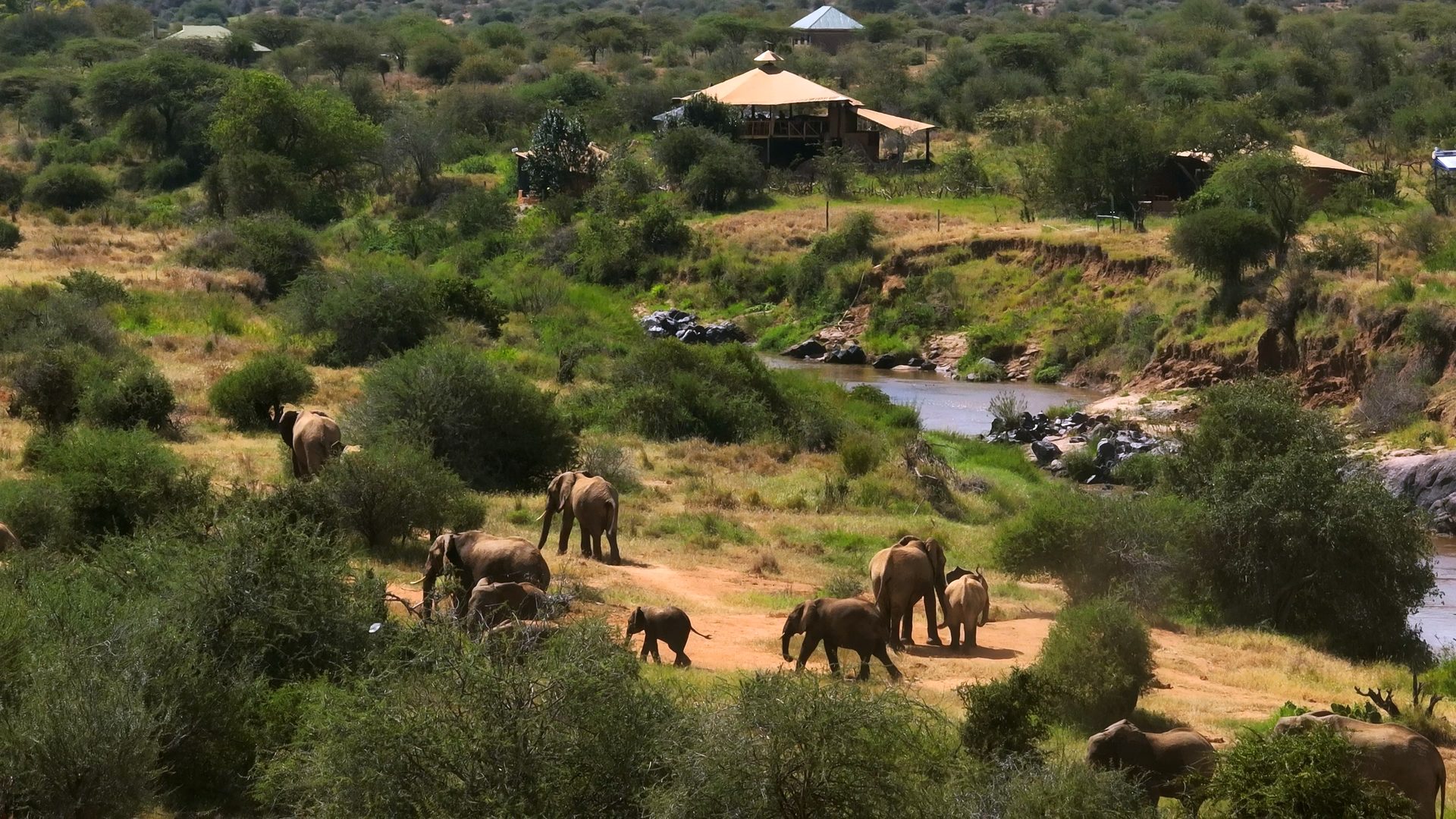
Camp sits on an active elephant migratory corridor beside the Ewaso Nyiro river, in one of the last great elephant kingdoms in East Africa. Herds have moved through this valley for generations, on their own terms.
In This Conservancy
Elephants at
the Ewaso
Corridor
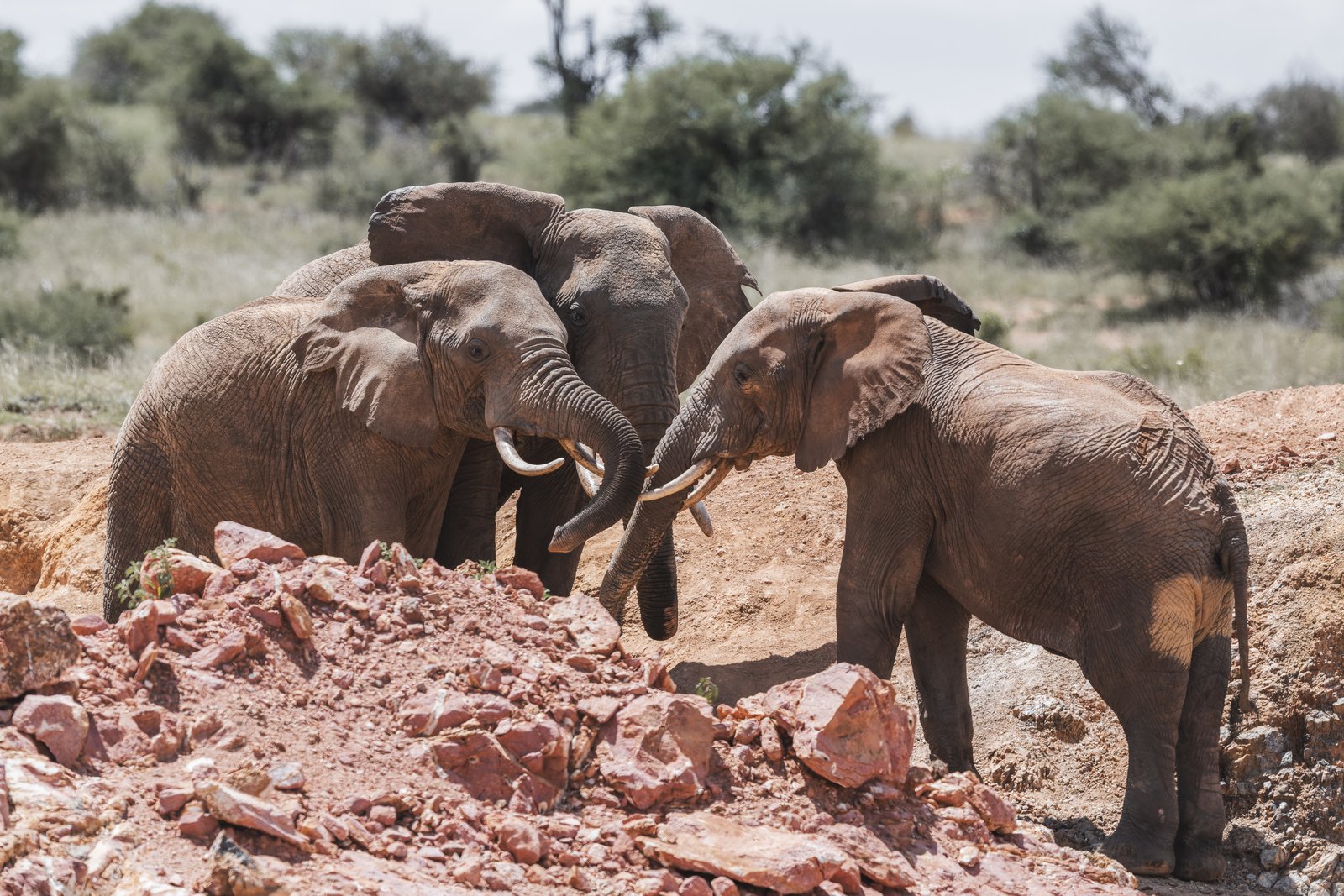
For generations, elephant herds have moved freely through this valley, crossing the Ewaso Nyiro river on their own terms and their own schedule. Laikipia is one of the last great elephant kingdoms in East Africa, and the camp exists to witness that, never to interfere with it.
The photography hide is positioned to observe the crossing from a respectful distance, and elephants are often visible from the camp's open-air dining area moving along the river below, no vehicle required.
"We built the hide to overlook the crossing, not to occupy it. The elephants cross when and where they choose. Our role is to be invisible."
Know the Species
Interesting Facts About
African Elephants
The African elephant is the largest living land animal on Earth. Adult bulls can weigh several tonnes, and the species' sheer scale shapes much of its behavior, from feeding needs to the space it requires to roam.
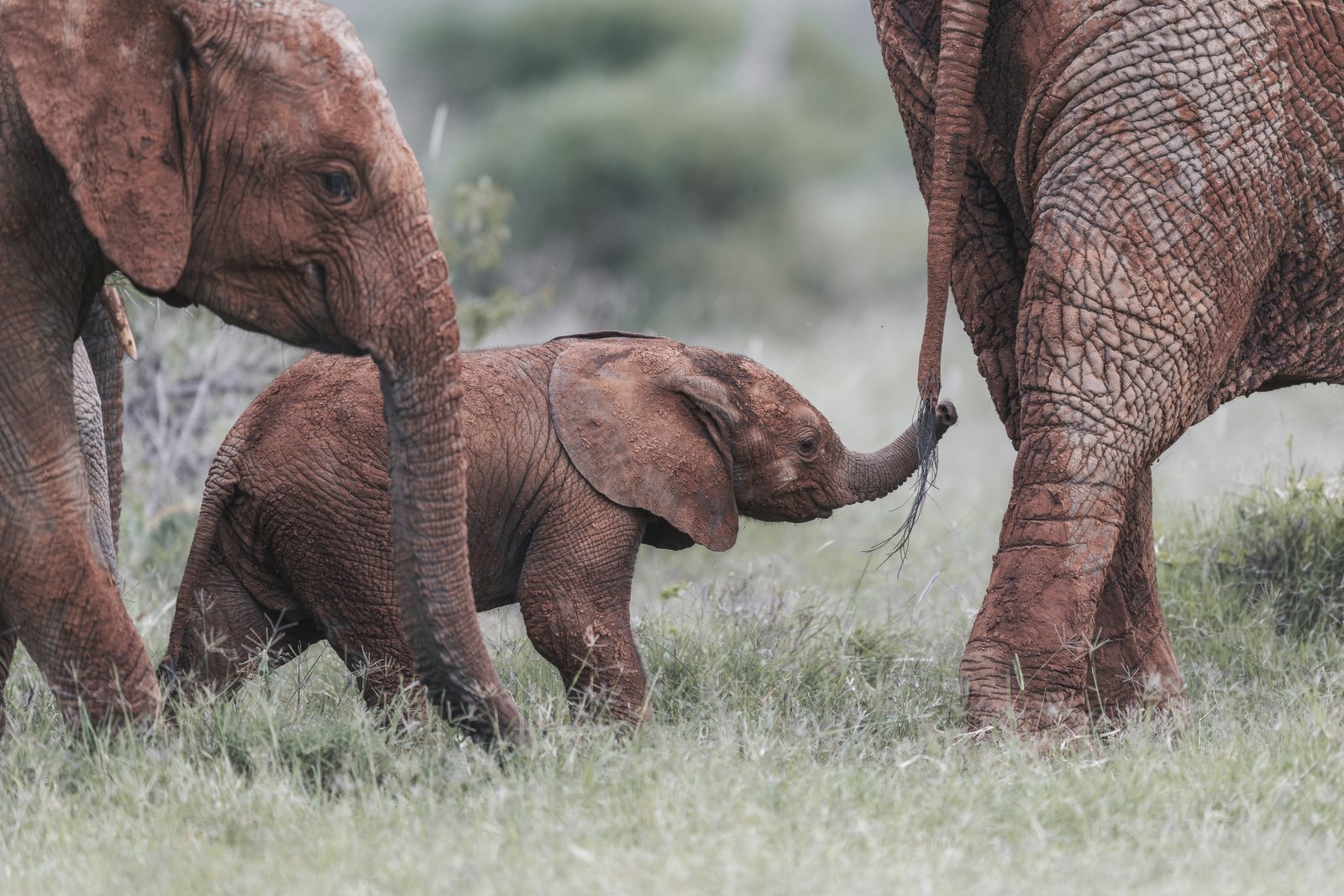
Elephant herds are led by a matriarch, usually the oldest and most experienced female. She carries the herd's knowledge of migration routes, water sources, and safe passage, passed down across generations.
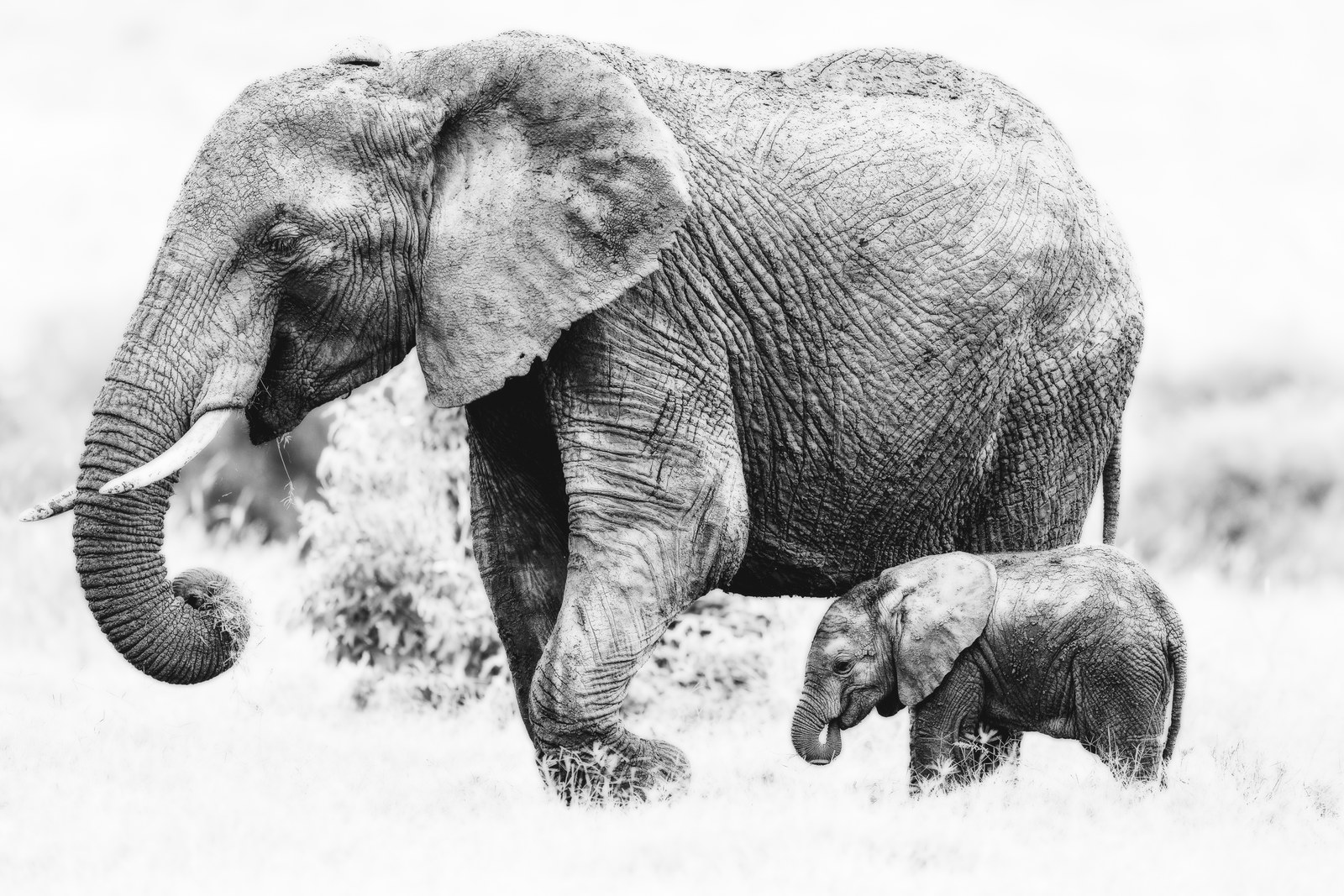
Elephants have the longest gestation period of any mammal, at roughly 22 months. A single calf is usually born, and it can take years of close maternal care before it is fully independent.
Elephants communicate over long distances using low-frequency infrasound, some of it below the range of human hearing. This allows separated herd members to stay in contact across large landscapes.
The elephant trunk contains tens of thousands of individual muscles, giving it remarkable precision for breathing, drinking, feeding, and communication, alongside its raw strength.
African elephants are classified as Endangered by the IUCN. Populations have been reduced significantly by poaching for ivory and by habitat loss, which is part of why protected corridors like this one matter so much.
Common Questions
Frequently Asked
Questions
Where is the elephant migratory corridor at Ewaso Elephant Crossing?
The camp sits within Laikipia's Elephant Kingdom, on an active migratory corridor beside the Ewaso Nyiro river. Elephant herds have moved through this valley for generations, crossing the river on their own terms and their own schedule.
Can you see elephants without going on a game drive?
Often, yes. Elephants are frequently visible from the camp's open-air dining area moving along the river below, without a vehicle required. A dedicated photography hide is also positioned to observe the river crossing from a respectful distance.
Does the camp interfere with the elephants' movement?
No. The camp does not bait, stage, or disrupt the herds. The photography hide was built to overlook the crossing, not to occupy it. The elephants cross when and where they choose, and the camp's role is to observe without interfering.
Are African elephants endangered?
Yes. African elephants are classified as Endangered by the IUCN. Populations have been reduced significantly by poaching for ivory and by habitat loss and fragmentation, which is part of why protected migratory corridors like the one at Ewaso are so important.
What is a wildlife corridor and why does this one matter?
A wildlife corridor is a stretch of habitat that connects separated populations of animals, allowing them to move safely between areas to find food, water, and mates. Corridors like the one at Ewaso help maintain genetic diversity among elephant populations and reduce conflict between elephants and neighboring communities by giving herds a safe, established route.
Are the elephants at Ewaso dangerous to guests?
Wild elephants are large animals that deserve caution and respect. The camp maintains a respectful distance from herds and does not permit guests to approach on foot without a guide. The photography hide and dining area are positioned so elephants can be observed safely without disturbing them or putting guests at risk.
The Case for Ewaso
Why Come Here
for Elephants
Camp sits directly on an active migratory route, not a place elephants occasionally pass through, but a corridor they have used for generations.
From the Journal
More on Elephants
Begin Your Reservation
Come See
the Crossing
Availability is intentionally limited for our inaugural season. Reserve your stay and ask us about the herds' recent movements when you enquire.