Ewaso Enclave Conservancy · Endangered Species
The Painted
Wolves of
Laikipia
A satellite-tracked pack of African wild dogs, one of the rarest and most endangered carnivores on the continent, roams the same conservancy that is home to Giza, the black leopard.
In This Conservancy
Wild Dogs at
the Ewaso
Enclave
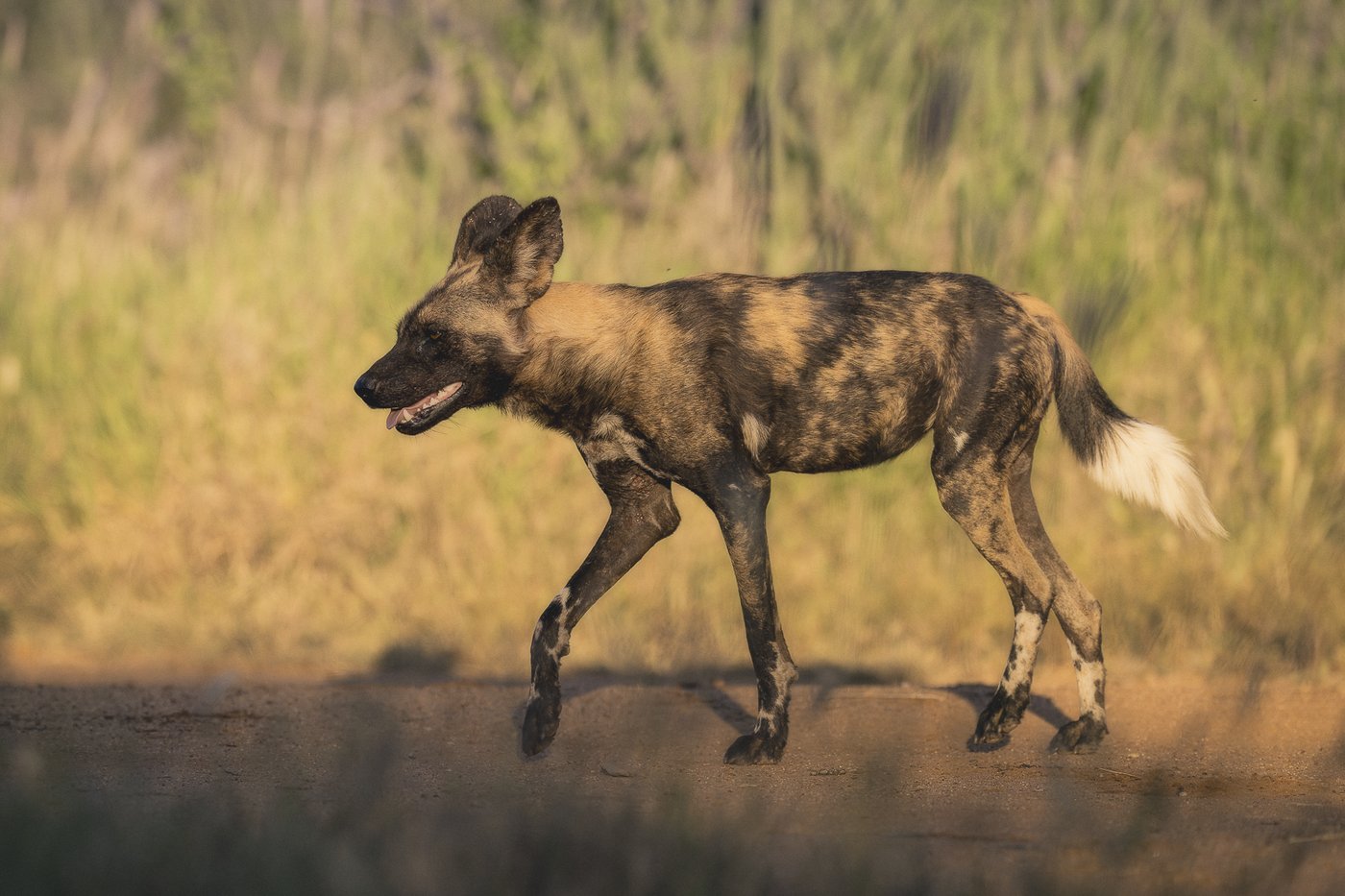
A pack of African wild dogs shares the Ewaso Enclave Conservancy with Giza, the black leopard, and the elephant herds that pass through the migratory corridor. The pack is monitored using satellite tracking collars, giving the camp's field team real data on the dogs' movements rather than guesswork.
African wild dogs are naturally difficult to see on safari anywhere in Africa. Packs roam very large territories and rarely stay in one place for long, which is exactly why satellite tracking makes such a difference. Combined with the same pre-dawn spotter network that tracks Giza's movements each morning, guests at Ewaso Elephant Crossing have a genuinely elevated chance at finding the pack, in a landscape where this species is under serious threat.
"The African wild dog is one of Africa's most endangered carnivores. A pack living and breeding successfully in this conservancy is a conservation story in itself."
Know the Species
Interesting Facts About
African Wild Dogs
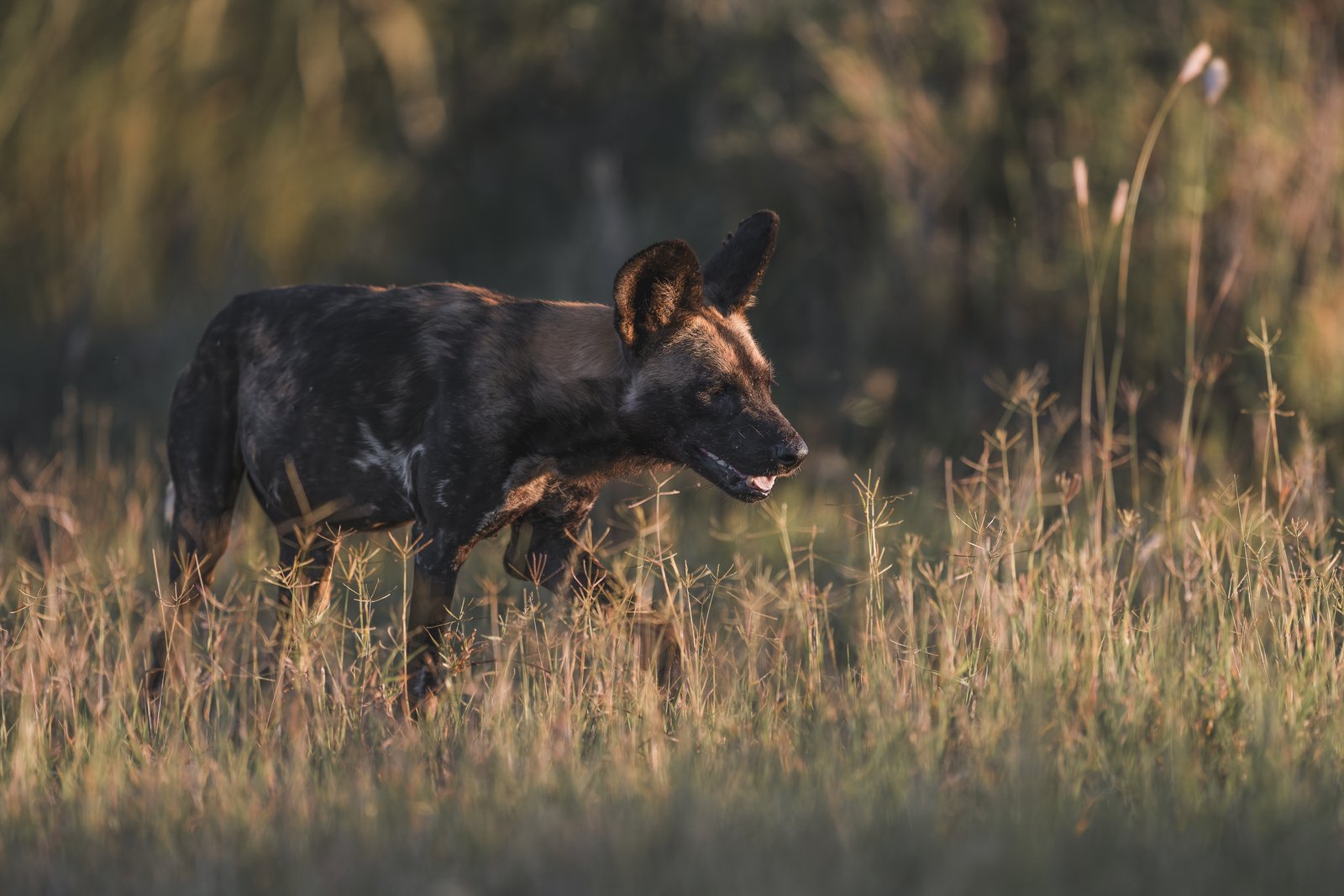
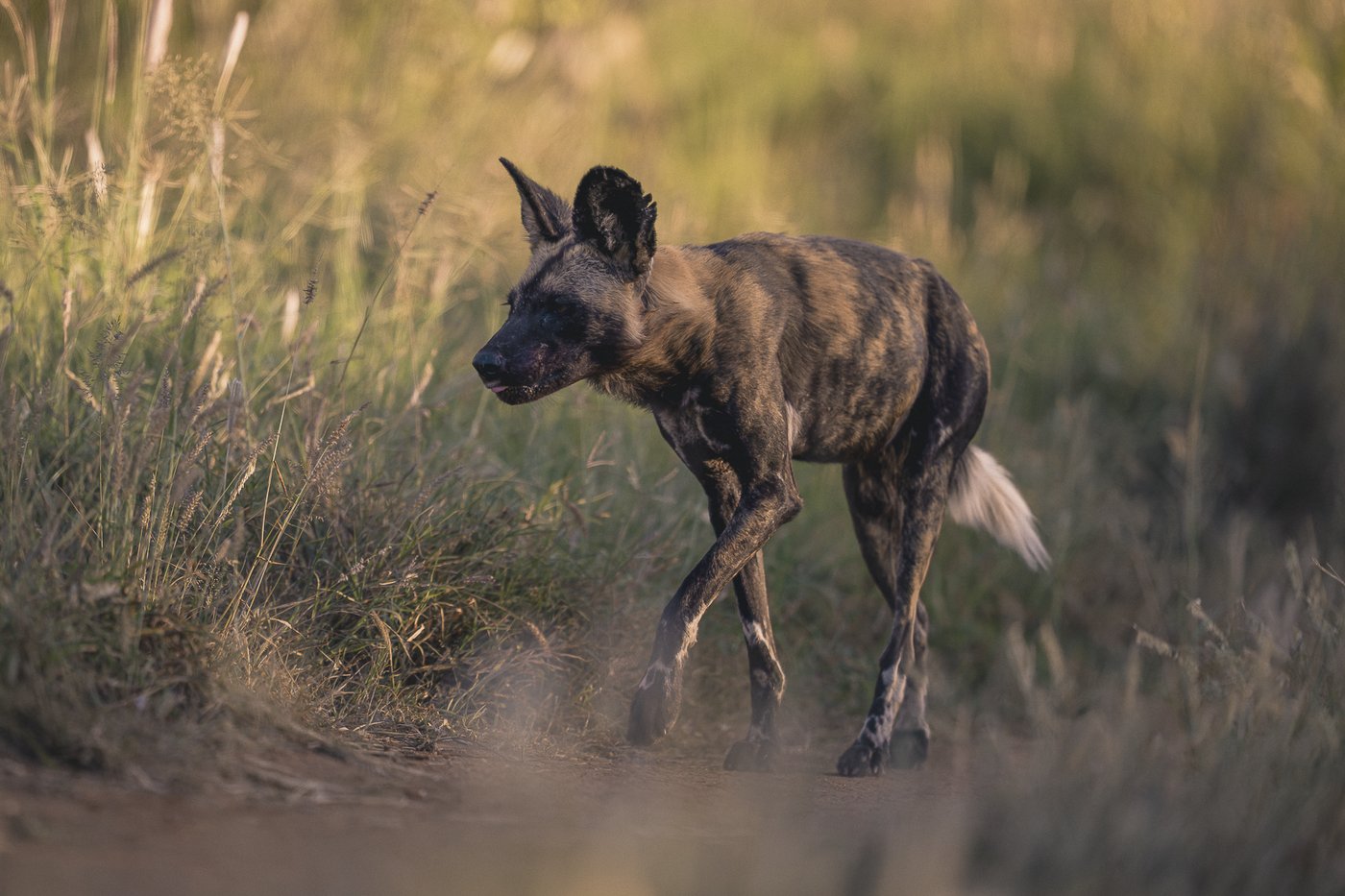
Their scientific name, Lycaon pictus, means roughly "painted wolf," a reference to their irregular, mottled coats of black, brown, yellow and white. They are also commonly called painted dogs, and were historically known as Cape hunting dogs.
Every wild dog has a unique coat pattern, no two individuals are marked the same way. Guides and researchers use these patterns to identify specific dogs within a pack, much like a fingerprint.
Wild dogs live in tight-knit packs with strong social bonds. The whole pack helps care for pups, bringing back food for nursing mothers and young that are too small to hunt.
Wild dogs hunt cooperatively as a pack, coordinating in ways that make them unusually successful compared to many other African predators. This teamwork is central to how the species survives in open, competitive landscapes.
Their oversized, rounded ears aid both heat dissipation in hot climates and exceptional hearing, useful for keeping track of pack members and prey across wide, open terrain.
The IUCN classifies the African wild dog as Endangered. Fewer than an estimated 7,000 remain across the entire continent, threatened by habitat fragmentation, human-wildlife conflict, snaring, and disease spread from domestic dogs.
Common Questions
Frequently Asked
Questions
Can you see African wild dogs at Ewaso Elephant Crossing?
Yes. A pack roams the Ewaso Enclave Conservancy, where the camp is based. The pack is monitored using satellite tracking collars, and camp spotters use this data to give guests a genuine chance at a sighting, though wild dogs remain naturally difficult to find due to their large roaming range.
Why are African wild dogs so hard to see on safari?
Wild dogs live in packs with very large home ranges and move constantly in search of prey. Unlike lions or leopards, which often hold smaller, more predictable territories, a wild dog pack can be in a completely different part of a conservancy from one day to the next. That is exactly why tracking tools like satellite collars matter so much for finding them.
Are African wild dogs endangered?
Yes. The African wild dog is classified as Endangered by the IUCN, one of the most threatened carnivores in Africa. Populations have been reduced by habitat fragmentation, human-wildlife conflict, snaring, and disease transmitted from domestic dogs.
What is another name for the African wild dog?
African wild dogs are also known as painted wolves or painted dogs, a name that refers to their irregular, mottled coat pattern. Their scientific name, Lycaon pictus, translates roughly to "painted wolf." They were historically also called Cape hunting dogs.
How is each African wild dog identified?
Every wild dog has a unique coat pattern of black, brown, yellow and white patches, no two individuals are marked alike. Researchers and guides use these patterns to identify specific dogs within a pack, much like a fingerprint.
Do African wild dogs live near Giza the black leopard?
Yes. The satellite-tracked wild dog pack shares the Ewaso Enclave Conservancy with Giza and with the elephant herds that move through the migratory corridor. All three are part of what makes this small private conservancy such a rare concentration of wildlife in Laikipia.
The Case for Ewaso
Why Come Here
for Wild Dogs
Most safari camps cannot offer a realistic chance at wild dogs, they are simply too mobile and too rare. Ewaso Elephant Crossing is built around exactly this kind of encounter.
Begin Your Reservation
Come See the
Pack
Availability is intentionally limited for our inaugural season. Reserve your stay and ask us about current wild dog sightings when you enquire.